

Click&Boat
4.2 / 5 on Trustpilot · 21,937 reviews
The largest hire platform in the Mediterranean, from a RIB for the day to a yacht for the week.
Departure ports in Spain
Ports where you can hire a boat in Spain; the anchorages on the map are shown for reference.
Mainland Spain lines up well-equipped tourist coasts, from the Catalan Costa Brava to the Andalusian Costa del Sol, with plenty of marinas and a long season. Hire goes through the SamBoat, Click&Boat, GlobeSailor and Filovent platforms and through the charter bases in the big harbours, Barcelona, Empuriabrava, Alicante, Dénia and Málaga. Along these coasts people mostly hire motor boats for the day, and sailing yachts or catamarans by the week to reach the Balearics.
Choose it for easy, well-served cruising, with short legs between resorts and sandy anchorages. Avoid it if you are looking for deserted coasts: most of the mainland coastline is built up and busy in summer. Ideal for a day on the Costa Brava, or a crossing from Dénia or Barcelona to Ibiza and Mallorca.
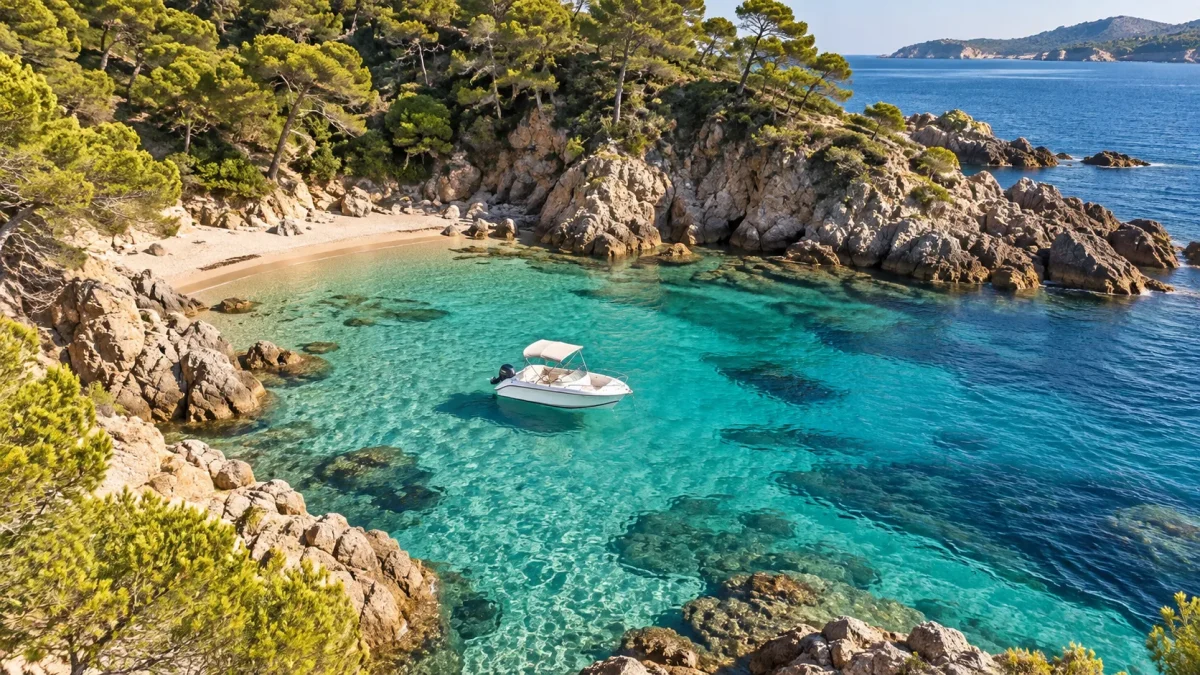
The Costa Brava, in northern Catalonia, has the most sheltered pine-and-rock coves on the mainland. Barcelona is sailed for the view of the city and quick access to the Garraf and Sitges. The Costa Blanca, around Alicante and Dénia, is the shortest departure point for Ibiza. The Costa del Sol, from Málaga to Marbella, extends the season into November. The Canaries, further south, are a separate winter destination.
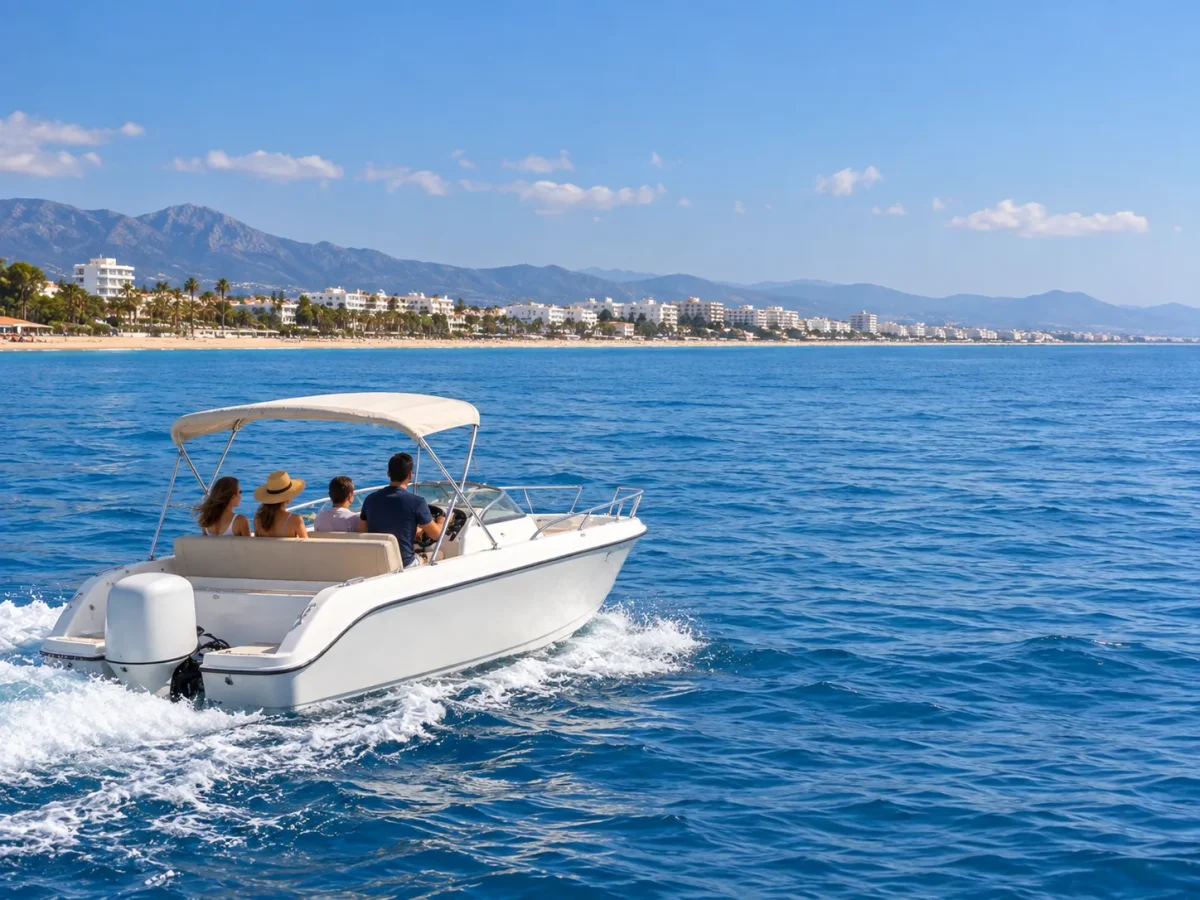
Hiring a boat without a skipper requires a recognised boating qualification and a VHF radio on board. For Spanish-flagged pleasure boats, Spain recognises several RYA certificates (Day Skipper, Coastal Skipper, Yachtmaster), each within its own limits of length and distance from the coast: check with the base which document it accepts before booking. From 1 October 2026, Spain no longer allows hire without a qualification: the person in charge must hold at least the licencia de navegación, issued after six hours of practical training with no exam, which covers boats up to 6 metres, in daylight, within two miles of a harbour or shelter.
The tramontana, a violent northerly, sweeps the Costa Brava and the Gulf of Roses, where it can rise suddenly and last several days. The levante, a humid wind from the east to north-east, raises a swell along the whole east coast and closes the Strait of Gibraltar. The garbí or llebeig, a south-westerly thermal breeze, shapes calm afternoons in Catalonia and the Valencia region. On the Costa del Sol, the westerly poniente and the levante alternate.
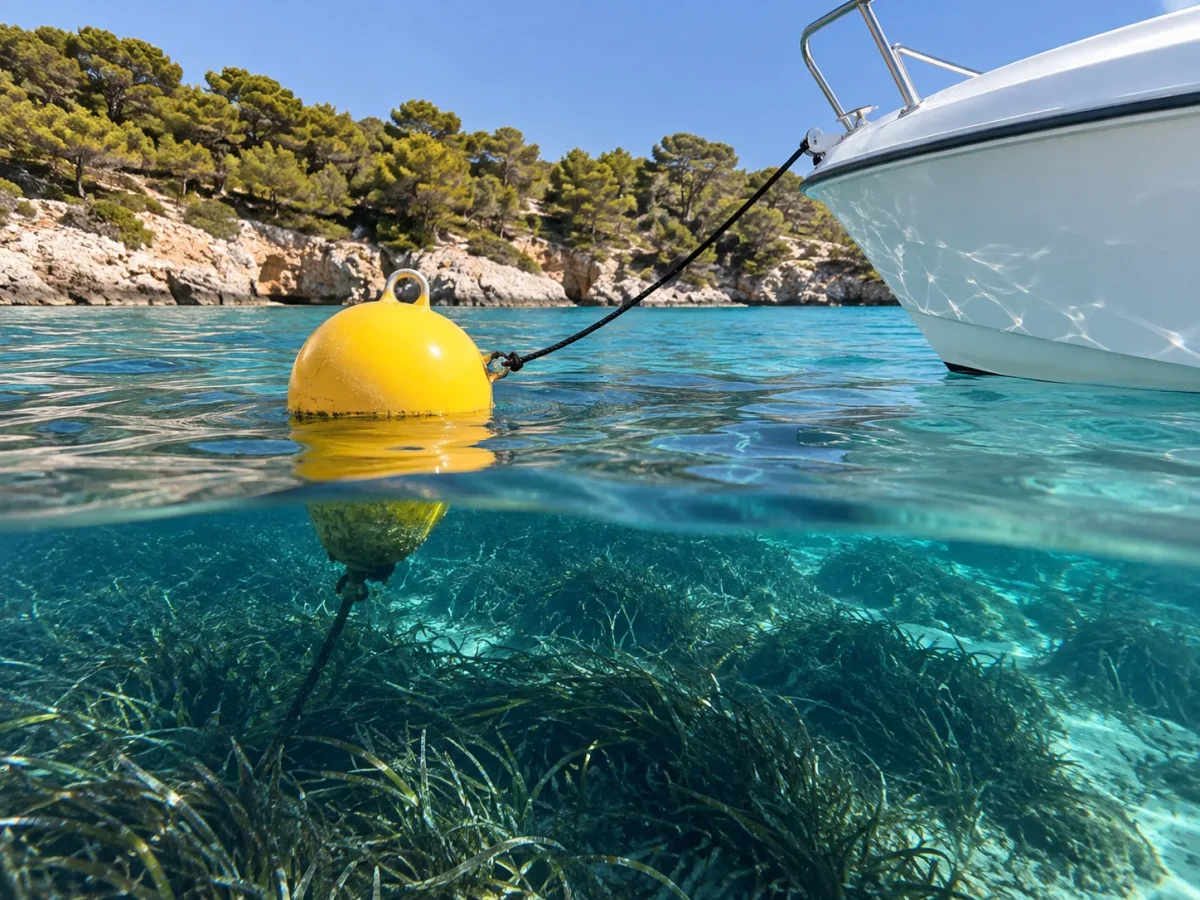
Posidonia seagrass meadows are protected along the whole Spanish Mediterranean coast: anchoring on them is banned and fined, particularly around the Medes Islands, Cap de Creus, the Serra Gelada reserve near Alicante and, even more so, in the Balearics. Anchor on clear sandy bottoms, or on the buoys laid in regulated areas. The bases hand out the seagrass map.
For a day out, take a motor boat from a marina, with or without a skipper depending on your licence, to a nearby cove. For a week, a sailing yacht or a catamaran is picked up in Dénia, Barcelona or Empuriabrava and is most often used to reach the Balearics, one night at sea from the Costa Blanca. The high season in July and August is booked several months ahead.
The useful season runs from April to October in Catalonia and the Valencia region, and extends into November on the Costa del Sol and in the Canaries. May, June and September offer the best balance between warm water, moderate wind and less crowded marinas. July and August concentrate the crowds and the highest prices.
See also: the Balearics, Portugal and the Canary Islands.
At the bases on the Costa Brava (Empuriabrava, Roses, Palamós), in Barcelona, on the Costa Blanca (Alicante, Dénia) and on the Costa del Sol (Málaga, Marbella). Dénia and Barcelona are also departure points for the Balearics.
No, not from 1 October 2026: the person in charge must hold at least the licencia de navegación, obtained after six hours of practical training with no exam, for boats up to 6 metres, in daylight, within two miles of shelter. Otherwise, you hire with a skipper.
The tramontana, a violent and lasting northerly on the Costa Brava and the Gulf of Roses; the levante, from the east to north-east, which raises a swell along the whole coast; the garbí, a south-westerly thermal breeze in the afternoon. On the Costa del Sol, the poniente and the levante alternate.
Yes, Posidonia seagrass meadows are protected along the whole Mediterranean coast: anchoring on them is banned and fined. Anchor on clear sandy bottoms or on the buoys in regulated areas, such as the Medes Islands or Cap de Creus.
From May to October in Catalonia and the Valencia region, until November on the Costa del Sol and in the Canaries. May, June and September are the most pleasant months; July and August are the most expensive and the busiest.
These platforms bring together boat hire listings in Spain: real-time availability, filters by boat type and budget, online booking and deposit. Prices and fleets vary from one site to another, so comparing the three main ones before booking is the rule.
Click&Boat
4.2 / 5 on Trustpilot · 21,937 reviews
The largest hire platform in the Mediterranean, from a RIB for the day to a yacht for the week.

SamBoat
4.5 / 5 on Trustpilot · 2,903 reviews
A wide fleet of boats from private owners and professionals, with or without a skipper, all along the coast.

GlobeSailor
4.6 / 5 on Trustpilot · 1,226 reviews
Focused on sailing and crewed charters, with catamarans and monohulls from the main Riviera harbours.

Filovent
4.3 / 5 on Trustpilot · 287 reviews
Weekly charter broker, with personal advice on choosing the boat and the cruising area.