

Click&Boat
4.2 / 5 on Trustpilot · 21,937 reviews
The largest hire platform in the Mediterranean, from a RIB for the day to a yacht for the week.
Departure ports in the Caribbean
Ports where you can hire a boat in the Caribbean; the anchorages on the map are shown for reference.
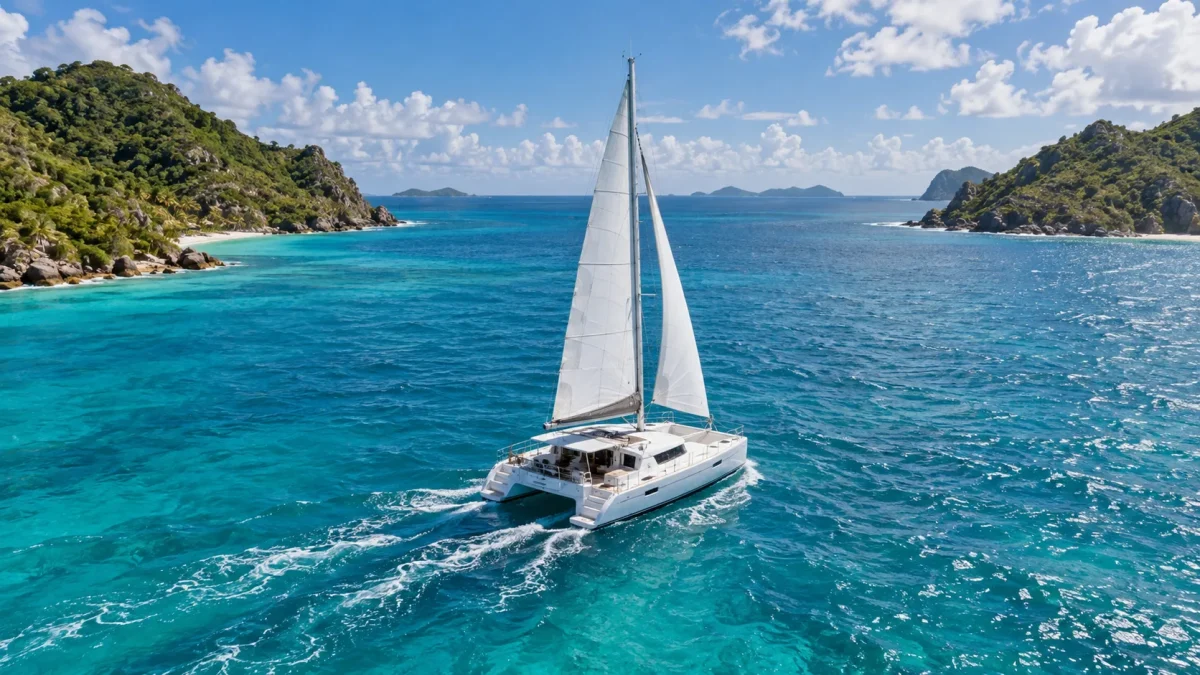
The Caribbean is, alongside the Mediterranean, the world’s leading charter area. You sail, catamarans first, on short legs between closely spaced islands, under a steady trade wind and in water at twenty-eight degrees all year round. Hire goes through the SamBoat, Click&Boat and GlobeSailor platforms and through the big charter bases, in Guadeloupe and Martinique on the French side, and in Tortola and St Martin elsewhere.
Choose it for a week of easy downwind sailing between white-sand anchorages, with no long passages. Avoid it during the hurricane season, from June to November, when many bases close. Ideal for a round trip from Guadeloupe to Les Saintes, Marie-Galante and Dominica, or a run down the Grenadines.
See available boats in the Caribbean
The French Antilles, Guadeloupe and Martinique, offer French-speaking bases and the Les Saintes archipelago, Marie-Galante and nearby Dominica. The British Virgin Islands, around the Sir Francis Drake Channel, are the busiest area, with an anchorage every five miles. The Grenadines, from St Vincent to Grenada, line up the Tobago Cays and Bequia. Further north, Antigua, St Martin and Anguilla form another cruising ground, with longer passages.
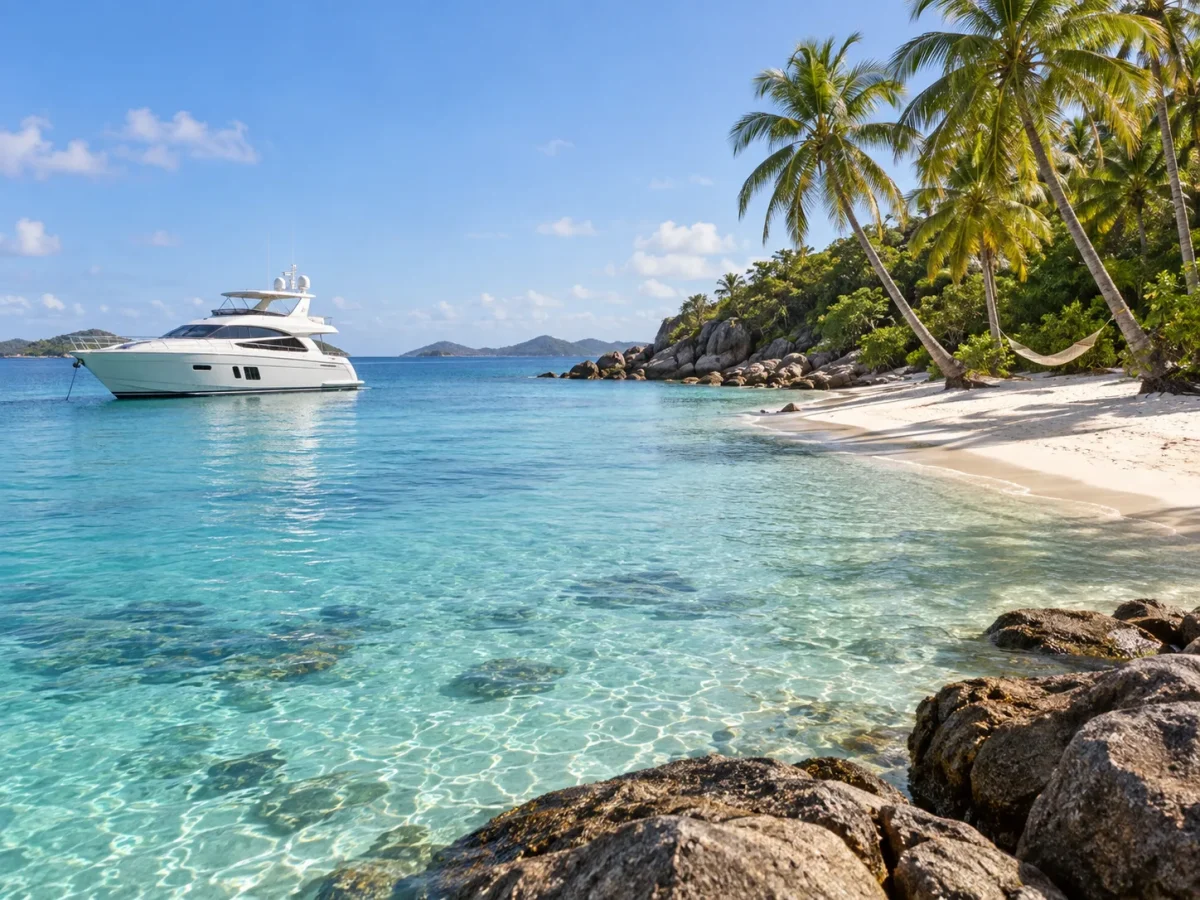
With a bareboat, you hire the boat alone; the base asks for a sailing CV showing real experience as skipper; an RYA Day Skipper certificate or an ICC is the usual reference for British sailors, and some bases ask for Coastal Skipper level or higher. It is the usual option in the Antilles and the BVI. By the cabin, you book your place on a catamaran sailed by a skipper, and the group forms at boarding. Crewed, a skipper and a host or cook are on board, a common option in the Grenadines and the Seychelles. Without a qualification, only cabin and crewed charter are possible.
The easterly trade wind blows almost constantly, force 4 to 6, fresher from December to March and lighter in September and October. You sail downwind heading south and upwind to come back, using the shelter on the lee side of the islands. The easterly swell can make exposed anchorages uncomfortable: always pick the lee side of the island.
The hurricane season officially runs from 1 June to 30 November, with a peak in September. Most charter bases suspend or limit hire during this period, and insurers impose return-to-port clauses when a warning is issued. The high sailing season therefore runs from December to May, drier and windier.
The high season, around Christmas and in February and March, is booked six to twelve months ahead, especially for catamarans. A deposit secures the dates, the balance and the security deposit are paid at departure, and the security deposit can be covered by insurance. Prices may change with the season.
See also: the British Virgin Islands, catamaran charter in the Antilles and the Seychelles.
From December to May, the dry and windy season. During the hurricane season, from 1 June to 30 November with a peak in September, most charter bases suspend or limit hire.
For a bareboat without a skipper, the base asks for a sailing CV showing real experience as skipper; an RYA Day Skipper certificate or an ICC is the usual reference for British sailors, and some bases ask for Coastal Skipper level or higher. Without one, there is cabin or crewed charter, where the boat is sailed by a professional skipper.
In Guadeloupe and Martinique on the French side, in Tortola in the British Virgin Islands, in St Martin, in Antigua, and in St Vincent or Grenada for the Grenadines.
With a bareboat, you hire the boat alone and sail it yourself. By the cabin, you pay for your place on a catamaran with a skipper, the group forming at boarding. Crewed, a skipper and a cook or host are on board.
The easterly trade wind, almost constant, force 4 to 6, fresher from December to March. You sail downwind heading south and always pick the lee side of the islands to anchor out of the swell.
These platforms bring together boat hire listings in the Caribbean: real-time availability, filters by boat type and budget, online booking and deposit. Prices and fleets vary from one site to another, so comparing the three main ones before booking is the rule.
Click&Boat
4.2 / 5 on Trustpilot · 21,937 reviews
The largest hire platform in the Mediterranean, from a RIB for the day to a yacht for the week.

SamBoat
4.5 / 5 on Trustpilot · 2,903 reviews
A wide fleet of boats from private owners and professionals, with or without a skipper, all along the coast.

GlobeSailor
4.6 / 5 on Trustpilot · 1,226 reviews
Focused on sailing and crewed charters, with catamarans and monohulls from the main Riviera harbours.

Filovent
4.3 / 5 on Trustpilot · 287 reviews
Weekly charter broker, with personal advice on choosing the boat and the cruising area.